


Hey fam,
Have you heard of the guy who relocated 6 million bees by hand to save their lives?
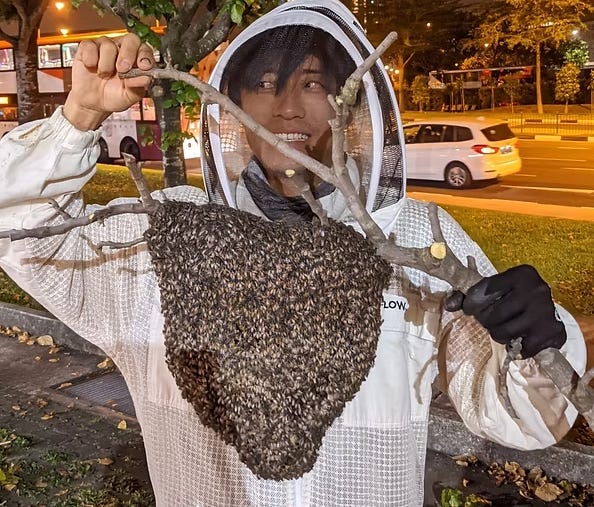
When Clarence Chua was a child, his father decided to suit up to try and relocate a nest from their home.
It became a core memory for Clarence, so in 2020 when a swarm moved into his garden shed in Singapore but no one could come, he taught himself how to move it through online videos.
After a dozen stings he was successful, but then he learned that 30% of our food crops like fruits, vegetables, and nuts are pollinated by bees, as well as 70% of lowland rainforest.
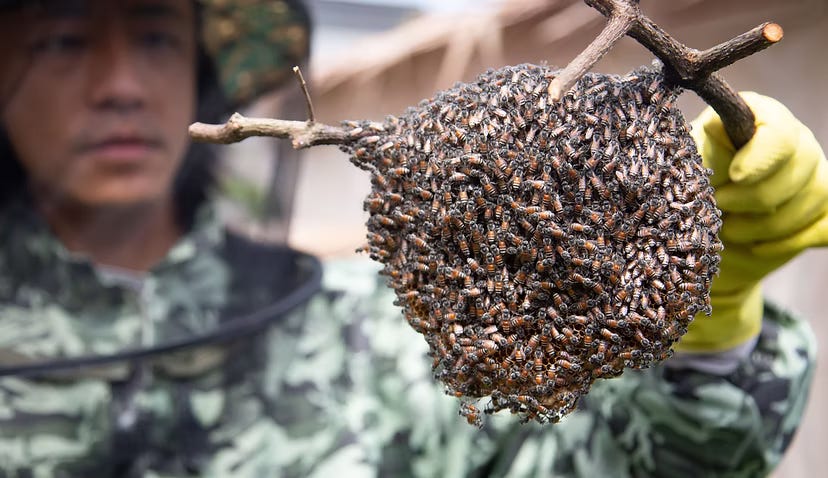
He knew that most people just sprayed and exterminated nests, so he started heading to homes, mailboxes, and even the engine of an airplane to instead suck up and carry them to safety.
And he’s now humanely relocating 100 nests a year without harming the bees by moving the full nest intact with the babies, queen, and workers.
Even though it’s not easy or very profitable dealing with these wild animals, he continues to care for them through a nature center and farmstay, and despite being stung thousands of times, his heroics deserve a shoutout as he puts his safety on the line to protect the lives of little these insects that won’t even know what he’s done for them.
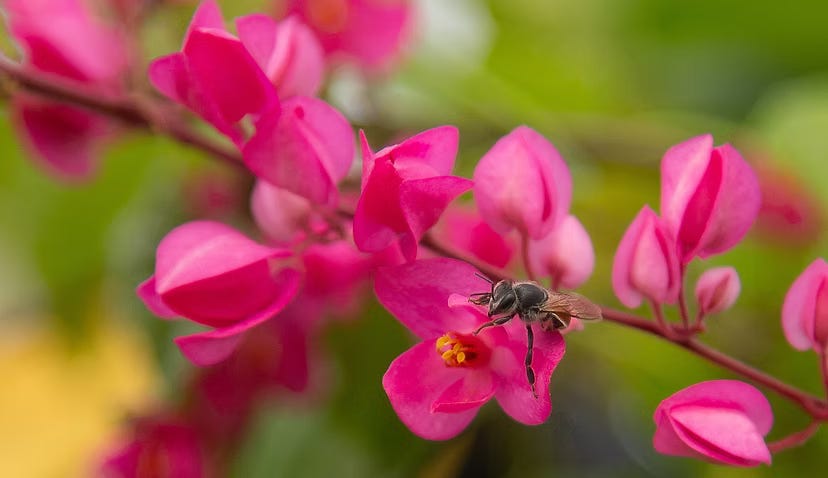
Yet for all that bees do for us, maybe we should give back a little more like Clarence.
Would you hire someone to safely relocate bees instead of exterminating them?
What else is going right in the world
Dressing up like bears to save a cub
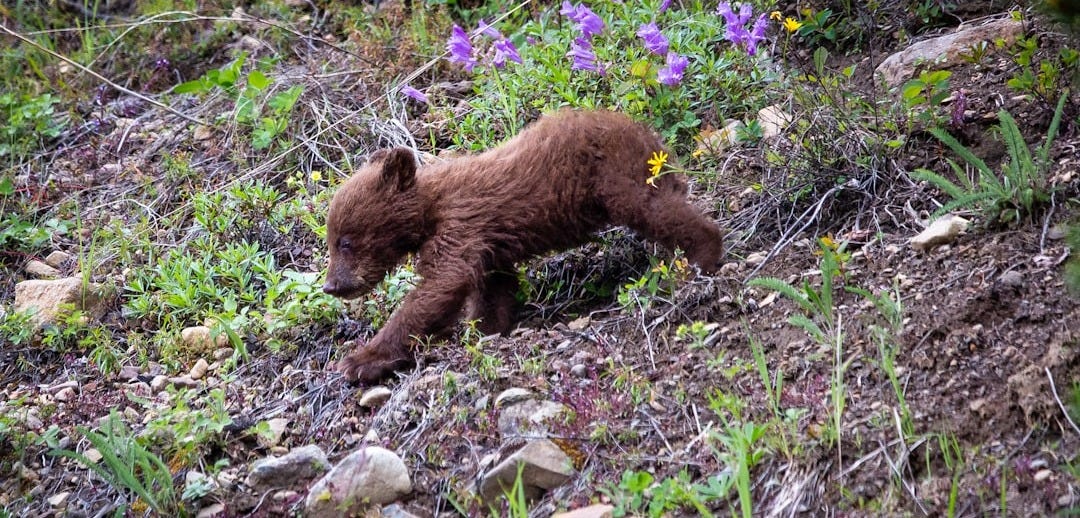
Last year, an abandoned black bear cub was found with mama bear nowhere to be seen, so the San Diego Humane Society started caring for him. To prevent him from bonding with humans, they dressed up in heartwarmingly hilarious bear costumes as they nursed him back to health and returned him to the wild. This is one of my favorite stories, so I think it’s worth telling again! (Rebecca Cohen|NBC)
Three new species were discovered


The Demon cavefish, which was named after the demogorgon and is pale with no eyes, appears to be one of the rarest fish in the world. It’s found only in a a single cave in Alabama, and has no reaction to light, so researchers think it lived deep down beyond human reach until last year when it was first spotted.
While the Orange-Lipped ‘Likweli’ Monkey was originally photographed in 2008 but it was blurry and cut off, so it was forgotten. Yet when another researcher got a better photo 10 years later, they went out to find and study more in the Democratic Republic of Congo. They learned it has a spiky black coat, orange-cream skin around its mouth, and apparently makes a sound like a pig snorting.
And this vibrant stream-breeding frog from Costa Rica was found during research and fieldwork. Scientists learned it has a sister species, but stands out with its coloration and croak described as “a broad acoustic repertoire”. Honestly, this one is a work of art, with some incredible photos taken for the published study.
Quick bites
🌳 Amazon deforestation continues to drop, hitting a 10-year low.
🌞 Africa has installed and connected more solar to the grid in the first half of 2026 than the full year of 2025.
🍱 School meals in the Philippines are now free for all kindergarteners and 1st graders.
🐧 The first baby puffin seen in decades was spotted in Southern England.
🚄 New heat-resistant trains are coming to Europe.
Our community actions
📖 4.5 hours after sending this email, at 11:30AM ET, I’ll be live-streaming a book club on my Instagram! We’ll be discussing Sea Change with the author (Amanda, the Executive Director of Environmental Defense Fund) and main character (Buddy the fisherman). This will be my first time trying out this book club format, so please join us and bring your questions. If it goes well, maybe I’ll host more in the future :)

This newsletter was written by Jacob Simon. Over 1.5 million people are in our community across Instagram, TikTok, and YouTube. You can say hi on LinkedIn, or by hitting reply. Brand illustration by Andrea Miralles. Thanks for helping spread some positivity, and see you next week for more.
I love the story of Clarence! We have so much knowledge at our fingertips. We just have to take the time to look up how we can help the other locals of our town to flourish